
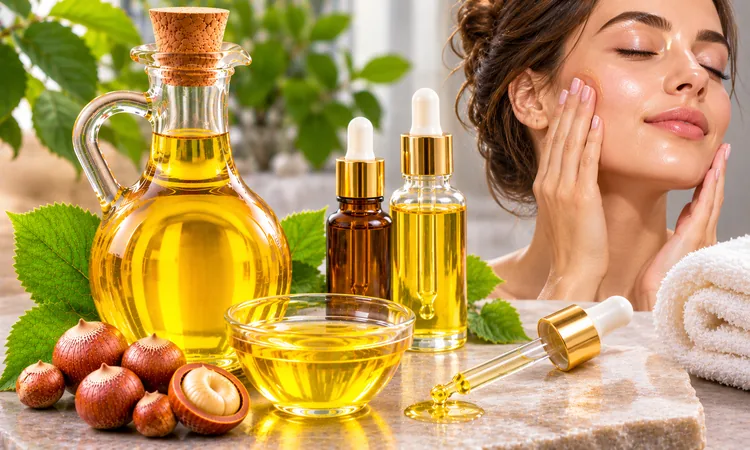
Overview. Facial oil blends are cosmetic formulations designed to combine selected lipid ingredients into a consistent product with specific application and sensory characteristics. Refined hazelnut oil may be evaluated as a botanical emollient in these formulations, either as a primary carrier oil or as part of a multi-oil blend.
Refined Hazelnut Oil in Cosmetic Facial Oil Formulations
Hazelnut seed oil, identified in cosmetic ingredient nomenclature as Corylus Avellana (Hazel) Seed Oil, is a plant-derived lipid that may be used as an emollient in selected skin care products.
Refined hazelnut oil contains a high proportion of oleic acid, along with other fatty acids that influence its physical and sensory characteristics. Its liquid oil properties make it a candidate for cosmetic developers seeking to formulate botanical facial oil products with controlled spreading behavior.
The refining process is intended to improve selected raw-material characteristics, including removal of unwanted impurities and moderation of strong natural odors. However, actual color, odor and performance should always be verified against the supplied product specification.
Formulation Applications and Oil Blend Compatibility
Facial oil products are commonly developed as anhydrous formulations, meaning that they do not intentionally contain a separate aqueous phase.
In these systems, refined hazelnut oil may be evaluated alongside other compatible cosmetic oils, esters and oil-soluble functional ingredients.
Potential formulation approaches include:
- Botanical facial oil blends: Combining refined hazelnut oil with other selected vegetable oils to achieve a targeted sensory profile.
- Lightweight facial oil products: Adjusting emollient combinations to develop fluid products with suitable spreading and after-feel.
- Multi-emollient skin care oils: Blending vegetable oils with compatible cosmetic esters where formulation objectives require specific texture.
- Oil-based serum formulations: Incorporating refined hazelnut oil into anhydrous cosmetic products intended for measured application.
Blend proportions should be developed through laboratory trials. Ingredient compatibility, appearance, oxidative stability and final skin feel depend on the complete formulation.
Emollient Performance and Sensory Characteristics
The sensory characteristics of a facial oil are influenced by viscosity, spreading, evaporation behavior of any volatile components and the interaction of its emollient ingredients.
Refined hazelnut oil may contribute lubrication and emollient properties to selected oil-based cosmetic blends. Its final effect on the product's perceived lightness, oiliness and skin feel must be assessed in the intended formulation.
Cosmetic developers should compare initial slip, spreading rate, residual feel and appearance against a reference formulation. Claims about suitability for particular skin types or dermatological benefits require appropriate substantiation.
Blending and Industrial Processing Considerations
Industrial facial oil manufacturing generally involves the controlled addition and mixing of compatible liquid ingredients in suitable production equipment.
The objective is to obtain a homogeneous blend while preserving the intended physical and chemical quality of the ingredients.
Important production considerations include:
- Ingredient ratios: Accurate weighing and dosing of each oil according to the approved formulation.
- Mixing efficiency: Sufficient agitation to achieve consistent blending without unnecessary air incorporation.
- Temperature management: Avoiding excessive thermal exposure that may accelerate deterioration of sensitive ingredients.
- Equipment hygiene: Maintaining clean, suitable mixing vessels and transfer lines.
- Batch traceability: Recording raw-material lots, production quantities and processing conditions.
The use of antioxidants may be considered when supported by formulation development and stability testing. Antioxidant addition does not replace appropriate storage, packaging or shelf-life evaluation.
Oxidative Stability and Shelf-Life Evaluation
Vegetable oils contain unsaturated fatty acids that may undergo oxidation during prolonged storage or exposure to unfavorable conditions.
In facial oil blends, oxidation can influence odor, appearance and overall product quality. The rate of deterioration depends on the complete fatty acid profile, formulation additives, packaging and storage conditions.
Appropriate evaluation may include:
- Monitoring color, odor and clarity throughout storage.
- Assessing peroxide value or other relevant oxidation indicators.
- Comparing samples under realistic and accelerated storage conditions.
- Checking compatibility with bottles, caps, seals and dispensing components.
- Evaluating the influence of light, temperature and oxygen exposure.
Accelerated testing may support comparative formulation decisions, but commercial shelf-life claims should be based on an appropriate finished-product stability program.
Packaging and Dispensing Compatibility
Facial oil blends are frequently packaged in small bottles fitted with droppers, pipettes, pumps or other controlled dispensers.
The selected packaging should be evaluated for chemical compatibility, sealing performance and dispensing consistency throughout the intended product life.
Particular attention should be given to possible interaction between oil-based formulations and elastomers, seals or other packaging components. Light-protective packaging may also be considered where supported by stability testing.
Refined Hazelnut Oil Technical Specifications
Cosmetic ingredient buyers should review the physical and chemical characteristics of refined hazelnut oil before introducing it into a commercial formula.
The stated quality parameters of the supplied refined hazelnut oil include:
| Quality Parameter | Stated Value |
|---|---|
| Free Fatty Acids (FFA) | Maximum 0.3% |
| Moisture Content | Maximum 0.2% |
| Oleic Acid | 74.2–86.7% |
These values represent stated raw-material acceptance criteria and do not guarantee specific sensory characteristics, cosmetic suitability or finished-product stability.
Manufacturers may need additional batch-specific tests depending on their application and regulatory obligations. Review the refined hazelnut oil technical specifications and confirm current documentation before procurement.
Recommended Cosmetic Product Development Trials
Before introducing refined hazelnut oil into a new facial oil formulation, manufacturers should establish a controlled development program.
A typical evaluation may include compatibility testing with other emollients, assessment of different blend proportions, sensory comparison, oxidation monitoring and packaging trials.
The final formulation should also undergo applicable cosmetic safety and regulatory assessment before commercial release.
Bulk Refined Hazelnut Oil for Cosmetic Manufacturers
Atlas Global Trading supplies refined hazelnut oil for industrial and wholesale buyers evaluating botanical oil ingredients for cosmetics and skin care manufacturing.
Available bulk packaging options include:
- 30 kg plastic drums: Suitable for smaller industrial ingredient purchasing requirements.
- 60 kg plastic drums: An intermediate packaging option for commercial production planning.
- 200 kg plastic drums: Suitable for higher-volume industrial ingredient supply.
- Larger export and tanker formats: Considered subject to order volume, logistics feasibility and receiving facilities.
When requesting a quotation, buyers should specify their anticipated purchase volume, preferred packaging, destination country and any cosmetic ingredient documentation requirements.
Commercial discussions may also cover shipment arrangements, batch traceability, quality documentation and expected delivery schedules.
Cosmetic Safety and Regulatory Requirements
Cosmetic manufacturers must qualify each raw material and ensure that the finished product complies with the requirements of the intended destination market.
In the European Union, cosmetic products are subject to Regulation (EC) No 1223/2009, including applicable safety assessment, ingredient labeling and product information obligations.
Because hazelnut is a tree nut, potential sensitization risks should be considered during cosmetic safety evaluation. Refined hazelnut oil should not automatically be described as hypoallergenic or suitable for every skin type.
Fully anhydrous products generally present different microbiological risks from water-containing cosmetics. Nevertheless, preservation requirements, manufacturing hygiene and contamination risks should be assessed for the complete finished formulation.
Antioxidants and antimicrobial preservatives have different functions and are not interchangeable.
Why Choose Atlas Global Trading?
Atlas Global Trading focuses on international refined hazelnut oil supply for professional industrial and wholesale buyers.
Our commercial approach emphasizes clear product information, practical bulk packaging alternatives and purchasing discussions based on the buyer's technical and logistics requirements.
For cosmetic manufacturers, confirming product specifications and required documentation before ordering supports a more efficient ingredient qualification process.
Tell us your required quantity, selected packaging, delivery destination and intended cosmetic application. Our team will review the inquiry and discuss available supply arrangements. Final formulation suitability and regulatory qualification remain the manufacturer's responsibility.