
Technical and Commercial Overview
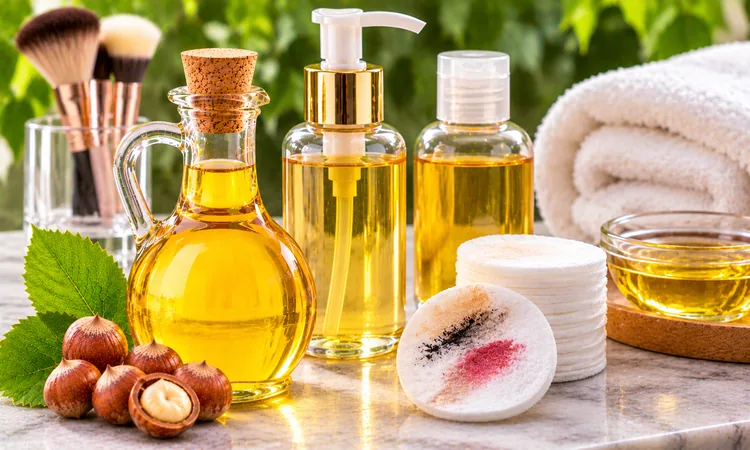
Refined hazelnut oil may be evaluated as part of the oil phase in cosmetic cleansing products designed to dissolve or mobilize makeup, sebum and other oil-compatible residues.
Oil-based cleansing systems may combine vegetable oils with other emollients, solvents, emulsifiers or surfactants to create a desired cleansing and rinse-off experience.
Refined hazelnut oil can be considered as an emollient or lipid-phase ingredient, but cleansing effectiveness, skin compatibility and rinsability depend on the complete formulation.
This article examines the formulation, manufacturing, safety, testing and procurement considerations involved in assessing refined hazelnut oil for cosmetic cleansing applications.
1. Where Refined Hazelnut Oil Fits in Cosmetic Cleansing
Oil-based cleansers are designed to help remove selected oil-compatible substances from the skin. The specific formulation determines the product's cleansing efficiency, application properties and rinse-off characteristics.
Refined hazelnut oil may be evaluated for its contribution to the oil phase in suitable cosmetic products.
Traditional Cleansing Oils
Anhydrous oil-based products may use vegetable oils and other compatible lipids to help dissolve or mobilize certain makeup and skin-surface residues.
Self-Emulsifying Cleansing Oils
These formulations combine an oil phase with suitable emulsification ingredients so that contact with water can create a dispersion that supports rinsing.
Makeup Removal Products
Oil-based systems may be evaluated for removing selected makeup materials. Actual performance varies according to cosmetic pigments, waxes, film formers and formulation design.
Professional Cosmetic Formulations
Manufacturers may investigate the oil as a component of professional cleansing and skincare products, subject to ingredient approval and finished-product validation.
Emollient Contribution
In suitable cosmetic systems, vegetable oils can contribute to spreading and the sensory character of the formulation.
The degree of residue, slip and after-feel depends on the oil blend, emulsifier system, application method and rinse-off behavior.
No universal skin benefit or cleansing performance claim can be established from the presence of refined hazelnut oil alone.
2. Technical Properties of Refined Hazelnut Oil
Raw material selection for cosmetic formulations should consider ingredient identity, fatty-acid profile, physical properties, oxidation condition and available analytical information.
| Parameter | Published specification | Cosmetic formulation relevance |
|---|---|---|
| Composition | 100% refined hazelnut oil | Ingredient identity and raw material verification. |
| Oleic acid | 74.2–86.7% | Dominant monounsaturated fatty acid. |
| Linoleic acid | 5.2–18.7% | Polyunsaturated component relevant to formulation and oxidation assessment. |
| Palmitic acid | 4.2–8.9% | Part of the saturated fatty-acid fraction. |
| Stearic acid | 0.8–3.2% | Additional saturated fatty-acid component. |
| Free fatty acids | Maximum 0.3% | Relevant to refining quality and oil condition. |
| Moisture | Maximum 0.2% | Relevant to raw material handling and formulation risk assessment. |
| Peroxide value | Maximum 10 meq/kg | Indicator of primary lipid oxidation. |
| Density at 20°C | 0.898–0.915 | Relevant to physical characterization and mass-volume calculations. |
| Iodine value | 81–92 | Characterizes fatty-acid unsaturation. |
| Refractive index at 20°C | 1.468–1.473 | Supports physical identity assessment. |
| Insoluble impurities | Maximum 0.05% (m/m) | Relevant to oil cleanliness. |
High Oleic Acid Profile
Oleic acid is the dominant fatty acid in refined hazelnut oil.
This composition may be relevant to the oil's behavior in an emollient blend, but the finished product's sensory characteristics cannot be predicted solely from fatty-acid composition.
Oxidation Condition
Unsaturated vegetable oils can oxidize during storage and processing.
Changes in oxidation condition may affect odor, appearance and formulation stability.
Suitable storage and formulation controls should therefore be established.
Viscosity and Handling
Viscosity affects ingredient pumping, mixing, dispensing and sensory performance.
The actual viscosity of refined hazelnut oil should be measured when required for equipment design or formulation development.
3. How Oil-Based Makeup Cleansing Works
Oil-based cleansing relies in part on the ability of compatible lipid ingredients to dissolve or mobilize certain oil-soluble materials.
Some makeup products contain waxes, oils, pigments and film-forming ingredients that may respond differently to an oil-based cleanser.
A refined vegetable oil may help provide the lipid environment needed to disperse some of these materials.
Makeup Solubilization
The ability of a cleansing formulation to mobilize makeup depends on its complete solvent and oil-phase composition.
Refined hazelnut oil may contribute to this system, but the removal of a specific makeup product must be demonstrated experimentally.
Removal of Sebum and Surface Residues
Cleansing oils may also interact with sebum and other lipophilic surface substances.
The balance between cleansing and acceptable skin feel depends on the whole formulation and the instructions for use.
Mechanical Application
Consumer application, massage duration, use of water and rinsing method can affect product performance.
Performance trials should therefore use consistent application conditions and suitable representative makeup materials.
4. Self-Emulsifying Cleansing Oils and Rinse-Off Performance
Some cleansing oils are formulated to form a milky dispersion when water is introduced during rinsing.
This behavior depends on the incorporation of suitable surfactants or emulsifiers into the formula.
Refined hazelnut oil itself does not automatically create a self-emulsifying or water-rinsable cleanser.
Non-Emulsifying Cleansing Oil
An oil-based product without an effective rinse-off system may require removal by wiping or another specified cleansing step.
Self-Emulsifying Cleansing Oil
A suitable emulsifier system may allow an oil-based formula to disperse on contact with water, supporting more convenient rinsing.
Cleansing Balm
A balm may use structured lipids and other ingredients to provide a semi-solid product that changes during application.
Hybrid Cleansing System
A formulation may combine oils with surfactants and other cosmetic ingredients to achieve a targeted balance of cleansing, texture and rinsing.
Surfactant and Emulsifier Compatibility
The selected emulsifier system should be compatible with the oil blend, other ingredients and intended water-contact conditions.
Compatibility should be evaluated through mixing, dilution and stability trials.
Manufacturers may assess the resulting dispersion, turbidity, residue, foam behavior and rinsability.
Emulsification on Contact with Water
A self-emulsifying cleansing oil should be evaluated under conditions that resemble actual consumer use.
Water quantity, temperature, mixing intensity and contact time may affect the observed rinsing characteristics.
Rinse-Off Sensory Evaluation
Finished-product evaluation may include perceived oily residue, ease of rinsing, skin feel and overall cleansing experience.
No universal sensory outcome is guaranteed from the use of refined hazelnut oil.
5. Cosmetic Formulation Development Considerations
A cleansing oil formulation can include multiple lipids, esters, emulsifiers and other cosmetic ingredients.
The proportion of refined hazelnut oil should be selected according to the intended product and supported by formulation trials.
Oil Phase Selection
Cosmetic developers may blend refined hazelnut oil with other compatible cosmetic ingredients to obtain desired spreading, solubilization and sensory characteristics.
Changes to the oil blend may alter viscosity, makeup removal behavior, residue and rinse-off performance.
Emulsifier Selection
The emulsifier system should be selected for the intended water-dispersion behavior and ingredient compatibility.
A formula that appears homogeneous immediately after manufacture may still require further stability testing during storage.
Fragrance and Sensory Ingredients
Additional cosmetic ingredients may influence aroma, skin feel, stability and safety assessment.
Formulators should evaluate the contribution of each ingredient under the intended use conditions.
Illustrative Development Framework
- Define product type: Identify whether the cleanser should be wiped off or rinsed with water.
- Select a candidate oil phase: Evaluate refined hazelnut oil alongside other permitted ingredients.
- Design the emulsification system: Choose suitable emulsifiers when rinse-off performance is required.
- Prepare pilot formulations: Compare multiple ingredient levels using controlled laboratory procedures.
- Test cleansing performance: Evaluate makeup removal and relevant consumer use conditions.
- Assess sensory performance: Examine spreading, residue, rinsability and overall skin feel.
- Complete stability and safety assessments: Evaluate ingredient compatibility, oxidation, packaging and applicable cosmetic requirements.
- Approve the final formulation: Record validated specifications, manufacturing controls and required product documentation.
6. Industrial Manufacturing and Processing
Manufacturing cleansing oils at commercial scale requires repeatable raw material handling, accurate dosing, appropriate mixing and controlled filling.
Refined hazelnut oil supplied in bulk may be transferred using suitable pumps, hoses, storage vessels and mixing equipment.
Ingredient Receiving
Incoming refined hazelnut oil should be checked according to the manufacturer's established raw material procedures.
Relevant checks may include product identification, lot documentation, packaging integrity, appearance and available analytical information.
Mixing and Processing Conditions
The production team should establish mixing equipment, ingredient addition sequence, processing temperature and batch duration for the finished formulation.
Processing conditions may influence homogeneity, oxidation and final-product sensory characteristics.
Bulk Oil Transfer
Pumps and transfer systems must be compatible with the oil, equipment requirements and the intended hygiene standards.
Contact with unsuitable residues, contaminated equipment or excessive environmental exposure should be avoided.
Filling and Packaging
The finished cleanser's dispensing system should be evaluated for leakage, compatibility, dispensing performance and actual product-use conditions.
Pump bottles, closures and other formats may perform differently depending on viscosity and the formula's solvent composition.
7. Cosmetic Safety, Eye-Area Use and Ingredient Qualification
A cleansing product should be evaluated for its intended method and site of application.
Raw material suitability does not automatically establish finished-product safety, especially when the product may be used near the eyes.
Eye-Area Safety
Makeup removers may be intended for the face, lips or areas close to the eyes.
Eye-area claims require particular attention to the complete ingredient composition, exposure conditions and relevant safety testing.
The presence of refined hazelnut oil alone does not establish ophthalmic tolerance or suitability for use around the eyes.
INCI Ingredient Identification
Corylus Avellana Seed Oil is a commonly used INCI designation for hazelnut seed oil.
Cosmetic manufacturers should verify the correct INCI designation, botanical identity and supporting documentation for the actual supplied material.
Food Grade Versus Cosmetic Suitability
A refined vegetable oil supplied for food manufacturing should not automatically be assumed suitable for every cosmetic application.
Cosmetic manufacturers should review raw material identity, purity, safety, stability and regulatory requirements as part of their own qualification procedure.
Hazelnut-Related Sensitivity Considerations
Hazelnuts are tree nuts, and relevant residual protein, sensitization and exposure considerations should be included in the cosmetic safety assessment where applicable.
Refining should not be assumed to eliminate all possible sensitivity concerns.
Microbiological Risk and Preservation
Preservation requirements depend on the finished product formulation, the presence or introduction of water, packaging and foreseeable use.
An anhydrous cleansing oil does not necessarily have the same preservation requirements as a water-containing cosmetic product.
However, anhydrous status alone does not remove the need for appropriate contamination and safety risk assessment.
Where relevant, manufacturers should establish microbiological specifications and preservative efficacy testing for their finished product.
Regulatory and Cosmetic Product Claims
Applicable cosmetic regulations vary by market. Ingredient listing, safety assessment, product information, manufacturing practices and claim substantiation may be required.
This article does not establish regulatory clearance, medical use, pharmaceutical grade or therapeutic benefits for refined hazelnut oil.
8. Oxidation, Formula Stability and Packaging Compatibility
Stability testing helps determine whether a cosmetic cleansing formulation maintains appropriate physical, chemical and sensory characteristics during its intended shelf life.
Oxidative Stability
Refined hazelnut oil contains unsaturated fatty acids, which may be affected by oxygen exposure, heat, light and other formulation ingredients.
Oxidative changes may influence the odor and sensory profile of a cleansing oil.
Suitable raw material controls and finished-product stability studies should be established.
Antioxidant System Evaluation
Cosmetic formulators may investigate appropriate antioxidant systems as part of the complete formulation strategy.
Antioxidant selection and effectiveness depend on ingredient compatibility, concentration, packaging and storage conditions.
No antioxidant addition is specified or guaranteed for the supplied refined hazelnut oil unless separately confirmed in product documentation.
Physical Stability
An oil-based formulation may need to maintain uniformity and acceptable appearance during storage.
Manufacturers should assess separation, cloudiness, sediment, viscosity and other relevant physical changes under defined test conditions.
Packaging Compatibility
The final cleanser's packaging must be compatible with the actual formulation.
Relevant evaluations may include contact material compatibility, leakage, closure performance, product dispensing and storage integrity.
Raw Material Shelf Life Versus Finished-Product Shelf Life
The supplied product description identifies a 24-month shelf life for refined hazelnut oil under specified storage conditions.
This does not mean a cleansing oil containing the ingredient will have a 24-month shelf life.
The finished cosmetic product requires independent stability assessment and appropriate shelf-life or period-after-opening determination where applicable.
9. Testing and Product Development Checklist
Cosmetic product development should compare candidate formulations under consistent laboratory and processing conditions.
The performance of a cleansing oil can only be properly evaluated through the finished formula and actual use conditions.
| Test area | Evaluation purpose | Relevant observations |
|---|---|---|
| Raw material identity | Confirm the intended refined hazelnut oil. | Specification and batch documentation. |
| Appearance and odor | Assess ingredient and formulation sensory quality. | Color, clarity, odor and consistency. |
| Makeup removal | Evaluate cleansing performance. | Removal of representative makeup formulations. |
| Rinsability | Evaluate ease of water removal. | Dispersion, rinsing and residual feel. |
| Emulsifier performance | Review self-emulsifying behavior. | Water dispersion and formula compatibility. |
| Viscosity | Assess manufacturing and dispensing behavior. | Measured flow at relevant temperatures. |
| Oxidative stability | Assess chemical deterioration during storage. | Peroxide value, other appropriate indicators and odor changes. |
| Skin compatibility | Support the finished-product safety evaluation. | Appropriate safety and tolerance assessments. |
| Eye-area tolerance | Assess intended use near the eyes, if applicable. | Relevant product-specific safety evaluation. |
| Microbiological risk | Determine suitable preservation and contamination controls. | Relevant risk assessment and testing. |
| Packaging compatibility | Verify container and dispensing suitability. | Leakage, compatibility and storage observations. |
| Shelf-life validation | Confirm acceptable commercial product life. | Validated stability results under relevant conditions. |
Controlled Pilot Batch Comparison
Product developers should document the target formula and vary selected ingredients systematically.
Comparing pilot batches under the same processing conditions can help identify changes attributable to the oil phase or emulsifier system.
Scaling from Laboratory to Manufacturing
Laboratory formulations may not behave identically at industrial scale.
Changes in mixing equipment, temperature control, batch volume and processing duration may affect the final product.
Manufacturers should validate the production-scale process before commercial release.
10. Bulk Refined Hazelnut Oil Procurement for Cosmetic Manufacturers
Atlas Global Trading handles industrial and international wholesale inquiries for 100% refined hazelnut oil.
Cosmetic manufacturers interested in the oil for cleansing formulations should specify the intended product and required raw material qualifications.
Available Bulk Packaging for Inquiry
| Packaging | Published quantity | Commercial consideration |
|---|---|---|
| Plastic drum | 30 kg net | Smaller industrial handling units and controlled warehouse stock. |
| Plastic drum | 60 kg net | Intermediate manufacturing quantities. |
| Plastic drum | 200 kg net | Larger manufacturing requirements with suitable handling equipment. |
| Export flexitank | Shipment-dependent | Containerized bulk liquid supply subject to equipment and route compatibility. |
| Bulk road tanker | 20 tonnes and above | High-volume shipments requiring suitable receiving facilities. |
Cosmetic Ingredient Documentation
Cosmetic buyers may require information about product identity, refining, quality characteristics, relevant impurities, oxidation limits and lot traceability.
Relevant requested documents may include a current product specification, available certificate of analysis, fatty-acid profile and supporting ingredient information.
Buyers should identify any specific cosmetic regulatory or quality requirements before placing an order.
International Shipment Planning
Packaging and freight selection depend on order quantity, destination, receiving equipment and delivery requirements.
Drum shipments may suit buyers requiring separate handling units, while larger bulk systems may be considered where operationally appropriate.
International purchasing terms, freight availability, lead times and supporting documents require separate commercial confirmation.
Information to Include in Your Bulk Inquiry
- Product: 100% refined hazelnut oil.
- Intended application: cleansing oil, makeup remover or other cosmetic formulation.
- Required quantity in kilograms or metric tonnes.
- Preferred packaging format.
- Destination country and delivery location.
- Required quality specifications and analytical limits.
- Cosmetic ingredient documentation requirements.
- Proposed purchasing or shipment schedule.
- Receiving and storage facility requirements.
- One-time or recurring purchasing needs.
For available industrial packaging, review the bulk packaging page. International purchasers can also read export and logistics information.
11. Key Technical Considerations
- Refined hazelnut oil may be evaluated as an oil-phase ingredient in suitable cosmetic cleansing formulations.
- Makeup removal performance depends on the entire finished formulation, not the oil alone.
- Self-emulsifying rinse-off behavior requires appropriate emulsifiers or surfactants and compatible formula design.
- Sensory properties, rinsability and residual feel should be tested under intended use conditions.
- Eye-area suitability requires appropriate finished-product safety evaluation.
- Oxidative stability, preservative requirements and packaging compatibility must be considered.
- Food-grade status does not automatically establish cosmetic-grade suitability.
- Cosmetic ingredient qualification should include relevant technical data, documentation and lot traceability.
- Bulk purchasing requires agreement on quantity, packaging, destination, specifications and commercial conditions.
Request Bulk Refined Hazelnut Oil for Cosmetic Formulation
Developing cleansing oils, makeup removers or other suitable cosmetic formulations? Contact Atlas Global Trading with your required volume, packaging preference, destination, intended use and technical documentation requirements.
Contact Our Sales TeamRelated Cosmetic Application Articles
This article provides general cosmetic formulation and commercial guidance. It does not establish cosmetic-grade certification, finished-product safety, eye-area suitability, pharmaceutical approval or validated cosmetic performance claims. Manufacturers must complete the relevant ingredient qualification, finished-product testing and regulatory assessment for their intended application and market.