
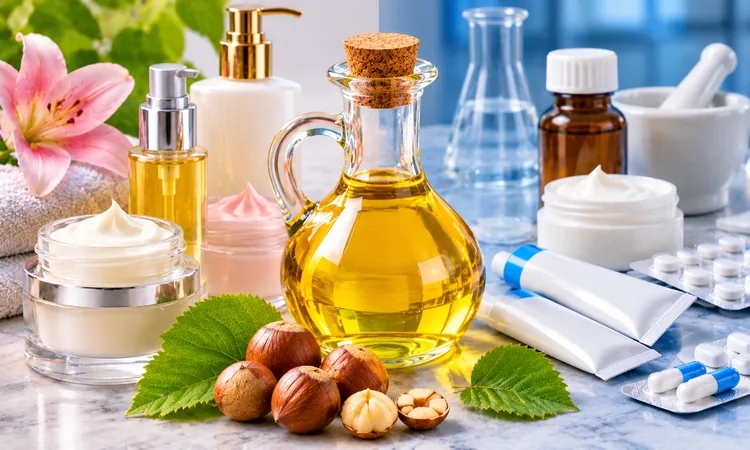
Overview. The same botanical ingredient can be considered for products subject to different regulatory frameworks. Refined hazelnut oil may be evaluated as an emollient ingredient in cosmetic formulations or as a candidate lipid material in experimental topical research. However, the legal classification of a finished product depends on its intended purpose, claims, composition and relevant market requirements—not simply on the presence of a particular oil.
Understanding Cosmetic and Pharmaceutical Product Claims
Cosmetic and medicinal products can share certain formulation ingredients while being subject to substantially different legal, scientific and documentation requirements.
A cosmetic product is generally intended for purposes such as cleaning, perfuming, changing appearance, protecting or keeping the external parts of the human body in good condition, according to the applicable legal definition.
A medicinal product may instead be presented for treating or preventing disease or be classified according to its pharmacological, immunological or metabolic action, depending on the relevant jurisdiction.
The classification of a borderline product requires a case-specific regulatory assessment.
Examples of Cosmetic and Medicinal Claim Language
Claim wording is an important consideration when preparing product labels, advertising materials, technical brochures and online descriptions.
| Cosmetic-Oriented Claim Examples | Potential Medicinal Claim Examples |
|---|---|
| Helps maintain skin softness | Treats eczema |
| Provides an emollient skin feel | Cures a skin infection |
| Helps moisturize the skin | Treats a diagnosed skin disease |
| Helps maintain skin in good condition | Prevents a specific medical disorder |
These examples are illustrative and do not automatically establish the legal classification or acceptability of a particular product. Even a cosmetic-oriented claim must be supported by appropriate evidence. Overall presentation, context and intended use are also relevant.
Refined Hazelnut Oil in Cosmetic Formulations
Refined hazelnut oil contains predominantly unsaturated fatty acids and may be evaluated as a plant-derived emollient ingredient in selected cosmetic formulations.
In cosmetic ingredient nomenclature, hazelnut seed oil is generally identified as Corylus Avellana (Hazel) Seed Oil. The exact ingredient identity and applicable labeling designation should be confirmed by the finished-product manufacturer.
Potential cosmetic research applications include facial oil blends, skin creams, lotions and selected anhydrous formulations.
The oil may contribute to the lipid phase and influence spreading, lubrication and sensory properties. Claims of moisturization or other skin benefits require suitable substantiation for the actual finished formulation.
Why Ingredient Properties Do Not Establish Medical Efficacy
A raw material's chemical composition does not demonstrate that a finished formulation can prevent, diagnose or treat a medical condition.
Laboratory information about fatty acid composition, emolliency or physicochemical characteristics cannot be substituted for product-specific clinical or regulatory evidence.
Similarly, using an edible refined vegetable oil does not automatically establish its acceptance as a pharmaceutical excipient.
Any proposed medicinal application requires an appropriate development, qualification and regulatory pathway.
Cosmetic Claims Substantiation and Evidence
Cosmetic manufacturers should establish claims that are consistent with the formulation's intended purpose and supported by reliable evidence.
Depending on the claim, relevant evidence may include:
- Formulation characterization: Ingredient composition, physicochemical properties and product specifications.
- Instrumental testing: Appropriate measurements supporting specific cosmetic performance claims.
- Consumer or sensory evaluation: Structured assessment of relevant product characteristics where suitable.
- Safety assessment: Evaluation of ingredients and the complete finished formulation.
- Stability testing: Evidence supporting physical and chemical quality during storage.
Evidence should support the precise wording of the claim and reflect the actual finished product. Supplier ingredient information alone may not be sufficient.
European Union Cosmetic Regulatory Requirements
In the European Union, cosmetic products are governed by Regulation (EC) No 1223/2009, including requirements concerning product safety, responsible persons, product information, labeling and applicable notification procedures.
Cosmetic claims are also subject to the common criteria established under Commission Regulation (EU) No 655/2013, including legal compliance, truthfulness, evidential support, honesty, fairness and informed decision-making.
Manufacturers and responsible persons should verify all applicable obligations, including current amendments and destination-market requirements.
A cosmetic product notification should not be confused with pharmaceutical marketing authorization.
Pharmaceutical Classification and Excipient Qualification
If a topical product is classified as a medicinal product, its development and commercialization may require a separate regulatory framework, including relevant manufacturing, safety, quality and authorization requirements.
A vegetable oil considered for pharmaceutical development may require additional assessment of its identity, purity, impurity profile, manufacturing controls, toxicological suitability and applicable pharmacopoeial requirements.
Refined hazelnut oil supplied for general industrial use should not be described as pharmaceutical grade without appropriate supporting qualification.
Atlas Global Trading does not claim that its supplied refined hazelnut oil is an approved pharmaceutical excipient or an authorized medicinal ingredient.
Safety, Sensitization and Finished-Product Evaluation
The safety of a topical formulation depends on ingredient quality, exposure conditions, concentration, product composition and intended use.
Hazelnut is a tree nut, and potential sensitization concerns should be reviewed during appropriate formulation safety assessment.
The degree of refining alone should not be used to assume that all relevant sensitization risks have been eliminated.
Cosmetic developers should also consider microbiological quality, preservation strategy and packaging compatibility where relevant. Claims such as "hypoallergenic" or "suitable for sensitive skin" require appropriate substantiation.
Technical Testing for Topical Formulation Development
Product developers considering refined hazelnut oil should conduct controlled formulation trials against clearly defined technical objectives.
Relevant assessments may include:
- Raw-material identity and batch consistency.
- Emulsion stability and viscosity where applicable.
- Oil oxidation indicators and changes in odor or color.
- Ingredient and formulation compatibility.
- Microbiological quality and preservative effectiveness testing.
- Packaging and container compatibility.
- Product-specific safety and claims substantiation.
The required test program depends on the final product category and regulatory jurisdiction.
Refined Hazelnut Oil Technical Specifications
Technical specification review is an important first step when qualifying an ingredient for cosmetic formulation or preliminary research.
The stated quality parameters of the supplied refined hazelnut oil include:
| Quality Parameter | Stated Value |
|---|---|
| Free Fatty Acids (FFA) | Maximum 0.3% |
| Moisture Content | Maximum 0.2% |
| Oleic Acid | 74.2–86.7% |
These figures represent stated raw-material specification values. They do not establish cosmetic product safety, efficacy, pharmaceutical-grade suitability or regulatory approval.
Buyers should confirm the current specification, available batch documentation and any additional qualification requirements.
Visit the refined hazelnut oil technical specifications page for further product information.
Claims Review Before Commercial Product Launch
Before introducing a cosmetic or regulated topical product to the market, manufacturers should review the relationship between product composition, intended use, testing and promotional language.
A practical review should cover:
- Product classification: Determine the applicable regulatory category in the destination market.
- Claim wording: Review labels, websites, brochures and sales materials.
- Evidence: Confirm that claims are supported by suitable product-specific testing.
- Safety documentation: Complete the assessments required for the intended product category.
- Ingredient qualification: Verify material identity, grade, specifications and available documents.
Regulatory review should take place before using treatment, disease-prevention or other potentially medicinal claims.
Bulk Refined Hazelnut Oil for Cosmetic and Research Buyers
Atlas Global Trading supplies refined hazelnut oil for international industrial and wholesale buyers.
Cosmetic manufacturers and research organizations may enquire about the current product specifications, packaging arrangements and available technical documentation for preliminary evaluation.
Commercial packaging options include:
- 30 kg plastic drums: A smaller industrial purchasing format.
- 60 kg plastic drums: An intermediate commercial supply option.
- 200 kg plastic drums: Suitable for larger-volume industrial ingredient requirements.
- Larger export and tanker formats: Considered according to order volume, receiving arrangements and logistics feasibility.
Packaging availability is a commercial supply consideration and does not itself establish cosmetic-grade certification or pharmaceutical qualification.
Commercial Purchasing and Documentation Requirements
Professional ingredient buyers should coordinate material purchasing with their product development, quality and regulatory teams.
An effective procurement inquiry should identify the intended product category, required grade, purchasing quantity, preferred packaging and destination market.
Additional discussions may cover current specifications, available batch documents, shipping arrangements, delivery planning and international trade terms.
Final ingredient suitability and product claims compliance remain the responsibility of the developing organization.
Why Contact Atlas Global Trading?
Atlas Global Trading focuses on international bulk refined hazelnut oil supply for professional industrial and wholesale customers.
Clear communication about technical requirements, packaging preferences and the intended application helps establish whether the available material is appropriate for further customer evaluation.
Share your required quantity, preferred packaging, destination country, intended application and technical documentation needs. Our team will review the inquiry and discuss available product and commercial information. Cosmetic claims substantiation, pharmaceutical qualification and regulatory compliance remain the responsibility of the finished-product manufacturer.