
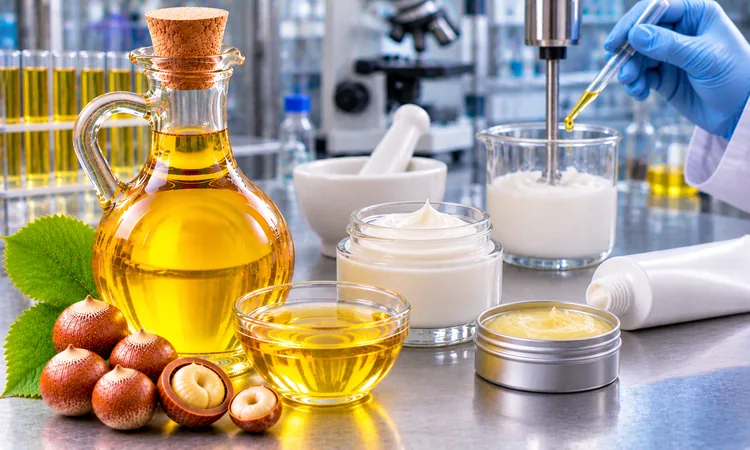
Overview. Refined hazelnut oil may be investigated as a candidate vegetable-derived lipid ingredient in experimental nonsterile topical formulation research. Its fatty acid composition and liquid oil properties make it relevant to preliminary studies involving lipid vehicles, emulsions and semisolid systems. Such investigation does not establish pharmaceutical-grade suitability, regulatory acceptance or therapeutic effectiveness.
Refined Hazelnut Oil as a Candidate Topical Lipid Excipient
Lipid excipients can serve different functions in topical formulations, including providing an oil phase, modifying consistency and influencing the distribution of other formulation components.
Refined hazelnut oil contains predominantly unsaturated fatty acids, particularly oleic acid. Researchers may examine its physicochemical characteristics when investigating possible lipid vehicle systems.
The oil's potential role must be determined through formulation-specific studies. Its performance as a carrier or excipient, compatibility with active substances and suitability for topical exposure cannot be inferred from fatty acid composition alone.
Potential Areas of Topical Formulation Research
Research programs may evaluate refined hazelnut oil in different nonsterile formulation concepts, provided that appropriate material qualification and safety procedures are followed.
- Topical emulsion research: Evaluation as a component of the oil phase in experimental oil-in-water or water-in-oil systems.
- Semisolid vehicle studies: Investigation of compatibility with selected lipid bases, structurants and formulation additives.
- Lipid carrier feasibility: Preliminary examination of solubility and compatibility with research substances.
- Ingredient comparison studies: Controlled comparisons with other qualified vegetable-derived oils under consistent laboratory conditions.
These examples describe possible research directions rather than established pharmaceutical applications or approved product uses.
Physicochemical and Formulation Considerations
The behavior of a lipid ingredient in topical formulation research depends on properties such as fatty acid composition, viscosity, oxidation characteristics and compatibility with other formulation components.
Research teams should consider:
- Solubility: Compatibility of target research compounds with the oil phase under defined conditions.
- Emulsion behavior: Influence on droplet formation, viscosity and physical stability in experimental emulsion systems.
- Oxidative stability: Changes in oil quality during processing and storage.
- Excipient interactions: Compatibility with emulsifiers, preservatives, antioxidants and other formulation materials.
- Batch consistency: Verification of chemical identity and relevant raw-material characteristics between lots.
Where drug substances are involved, compatibility, degradation and performance must be evaluated using suitable analytical methods and appropriate development protocols.
Laboratory Processing and Experimental Development
Early-stage formulation work should begin with clear research objectives, defined acceptance criteria and documented ingredient characteristics.
Depending on the system being studied, laboratory procedures may include controlled blending, emulsification, homogenization and evaluation of different oil-phase compositions.
Researchers should document mixing conditions, temperature exposure, ingredient sequence and the observed physical properties of each experimental batch.
Any movement from laboratory feasibility studies toward regulated pharmaceutical development requires separate qualification, validated manufacturing processes and an applicable quality framework.
Analytical Testing and Stability Evaluation
Raw-material evaluation is particularly important when considering a vegetable oil for research into regulated uses. An edible oil specification alone may not address all the characteristics required for pharmaceutical development.
Depending on the intended study, relevant evaluations may include:
- Raw-material identity and fatty acid profile confirmation.
- Free fatty acids, moisture and relevant oxidation indicators.
- Assessment of impurities and potential contaminants.
- Microbiological quality and applicable bioburden requirements.
- Physical stability, viscosity and phase separation monitoring.
- Compatibility with other excipients and research substances.
- Packaging and container-closure compatibility.
- Stability under defined storage and processing conditions.
Additional testing may be necessary depending on the route of administration, target product, applicable pharmacopoeia and regulatory jurisdiction.
Refined Hazelnut Oil Technical Specifications
The stated quality parameters for the supplied refined hazelnut oil include:
| Quality Parameter | Stated Value |
|---|---|
| Free Fatty Acids (FFA) | Maximum 0.3% |
| Moisture Content | Maximum 0.2% |
| Oleic Acid | 74.2–86.7% |
These values are stated raw-material specifications and should not be interpreted as pharmaceutical excipient acceptance criteria or evidence of compliance with a particular pharmacopoeial monograph.
Research organizations should request available batch-specific information and establish their own analytical requirements before material qualification.
Additional product information is available through the refined hazelnut oil technical specifications page.
Excipient Qualification and Regulatory Assessment
Pharmaceutical excipients are subject to qualification requirements that depend on the intended medicinal product, route of administration and applicable regulatory framework.
Research involving refined hazelnut oil should therefore distinguish between preliminary material screening, experimental formulation feasibility and formal pharmaceutical excipient qualification.
A development organization may need to assess supplier qualification, manufacturing controls, impurity profiles, analytical methods, toxicological information, relevant compendial requirements and stability data.
Such requirements cannot be satisfied merely by demonstrating that an oil is suitable for food manufacturing or general cosmetic applications.
No pharmaceutical-grade status, approval by a medicines regulator, validated therapeutic function or compliance with specific pharmaceutical manufacturing standards is claimed for the supplied product.
Safety and Topical Exposure Considerations
The safety of a proposed topical formulation depends on its complete composition, intended exposure, applicable quality controls and supporting evidence.
Hazelnut is a tree nut, and potential sensitization concerns should be considered during ingredient risk assessment. The degree of refining alone should not be used to assume that all sensitization risks have been eliminated.
Research organizations must independently evaluate relevant toxicological, microbiological and regulatory requirements before progressing toward clinical or commercial use.
Bulk Refined Hazelnut Oil for Research Procurement
Atlas Global Trading supplies refined hazelnut oil for international industrial and wholesale buyers. Research organizations may enquire about the available material specification and documentation for preliminary qualification purposes.
The standard commercial packaging options include:
- 30 kg plastic drums: A smaller industrial purchasing format.
- 60 kg plastic drums: An intermediate commercial supply option.
- 200 kg plastic drums: Suitable for larger-volume industrial requirements.
- Larger export and tanker formats: Considered where commercially and logistically appropriate.
Availability of these packaging formats does not indicate pharmaceutical-grade certification or suitability for regulated medicinal product manufacturing.
Buyers should confirm the intended research application, required grade, batch documentation, packaging, order quantity and delivery destination before purchasing.
Commercial and Technical Procurement Considerations
Research purchasing decisions should be coordinated with the organization's formulation, analytical and quality teams.
Before placing an order, buyers should establish whether the available specifications and supporting documents are adequate for the planned research activities.
Commercial discussions may include shipment requirements, batch traceability, available quality documentation, receiving conditions, packaging preference and international trade terms.
Where the intended use requires qualifications beyond the offered product grade, the buyer must identify those requirements before procurement.
Why Contact Atlas Global Trading?
Atlas Global Trading focuses on international bulk refined hazelnut oil supply and provides commercial product information for professional ingredient buyers.
For research organizations, a clear statement of the intended application and documentation requirements helps establish whether the available material warrants further technical evaluation.
Provide your expected purchasing volume, packaging preference, delivery destination and research-specific documentation requirements. Our team will review the commercial inquiry and discuss the available product information. Pharmaceutical qualification, safety assessment and regulatory acceptance remain the responsibility of the developing organization.