
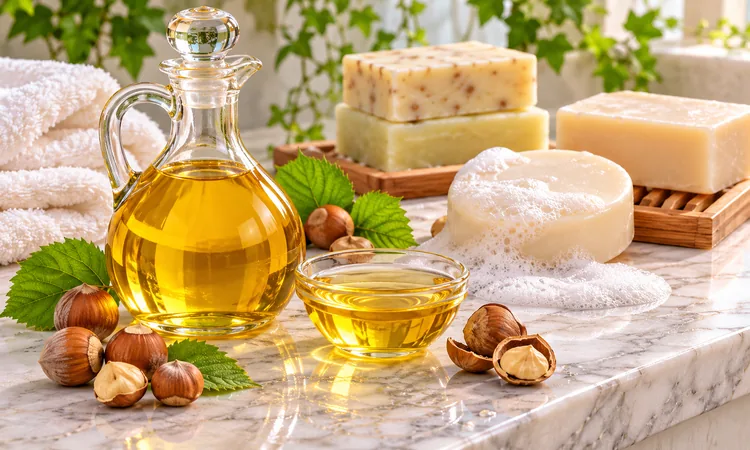
Overview. Refined hazelnut oil may be evaluated as a vegetable oil component in saponified soap and selected cleansing bar formulations. Its fatty acid composition contributes to the properties of the finished soap, while processing, complementary fats and alkali calculation determine the overall bar performance.
How Refined Hazelnut Oil Fits Soap Formulation
Traditional soap manufacture converts oils or fats into fatty acid salts through saponification. Refined hazelnut oil provides a triglyceride source that may form part of a broader vegetable-oil blend. It is rich in oleic acid, which can influence the characteristics of the resulting soap.
The final outcome depends on the full fatty acid profile, processing method, water content, formulation balance and product testing. Refined hazelnut oil is not a direct equivalent to surfactants used in synthetic detergent or syndet bars.
Saponification Value and Alkali Calculation
Each oil has a characteristic saponification value used to estimate the alkali required for conversion into soap. When a formula includes refined hazelnut oil, its alkali requirement must be included in calculations for the entire oil blend.
Manufacturers should obtain an appropriate saponification value for the actual oil, verify the sodium hydroxide or potassium hydroxide calculation and account for any intended unsaponified oil fraction. Accurate weighing, controlled mixing and alkali handling procedures are essential; generic recipes are not an adequate substitute for validated manufacturing controls.
Bar Hardness, Lather and Cleansing Performance
The balance of saturated and unsaturated fatty acids influences bar firmness, solubility, wear rate and lather characteristics. Because refined hazelnut oil contains substantial unsaturated fatty acids, the finished bar may require complementary structuring fats to meet the target hardness and durability.
Lather volume, foam stability, rinse feel and bar consumption should be measured rather than predicted from one ingredient. Manufacturers can compare controlled formulations to establish the desired balance of cleansing performance and sensory properties.
Manufacturing, Curing and Stability
Soap production may use cold-process, hot-process or other appropriately controlled manufacturing methods. Relevant variables include mixing temperature, alkali concentration, reaction completion, molding, drying and storage.
Curing or drying can affect moisture content and bar firmness, but curing alone must not be relied upon to correct an inaccurate alkali calculation. Oil oxidation may also affect appearance and odor during storage, so packaging and shelf-life assessments are important.
Quality Testing and Cosmetic Safety
A practical development and quality-control program should consider:
- Correct alkali dosing and appropriate raw-material identification.
- Residual free alkali, finished-bar pH and applicable safety limits.
- Bar hardness, weight loss, cracking and physical integrity.
- Lather, cleansing performance, rinse feel and sensory acceptability.
- Moisture content, oxidation indicators and storage stability.
- Packaging compatibility and applicable cosmetic safety requirements.
Hazelnut is a tree nut. Potential sensitization and ingredient-related safety concerns require assessment for the intended product. Cosmetic labeling and claims must comply with the destination market's requirements; no therapeutic claims are implied by the use of refined hazelnut oil.
Compare bars at the same cure age
Use the same mold geometry and cutting schedule for the control and trial batches. Weigh marked bars at cutting and again at each cure interval. Compare edge damage, wear and lather under the same water conditions so differences in cure time do not obscure the effect of changing the oil blend.
Technical Specifications and Bulk Commercial Supply
The stated raw-material parameters for refined hazelnut oil include free fatty acids of maximum 0.3%, moisture of maximum 0.2% and an oleic acid range of 74.2–86.7%. These values do not establish a soap-specific saponification value, cosmetic-grade approval or guaranteed finished-bar performance. Review the technical specifications and request relevant current documentation before qualification.
Atlas Global Trading offers refined hazelnut oil in 30 kg, 60 kg and 200 kg plastic drums. Larger export and tanker formats may be discussed subject to volume and logistics feasibility. Manufacturers should specify their expected consumption, packaging, delivery destination, applicable ingredient requirements and documentation needs when requesting a commercial quotation.