
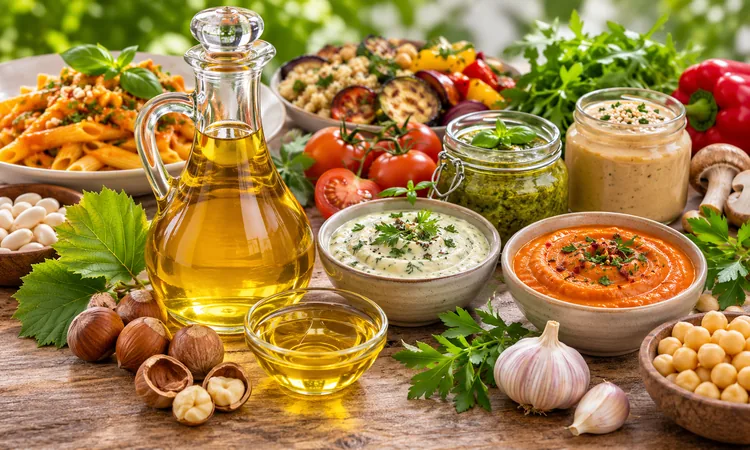
Overview. Plant-based savory sauces frequently combine vegetable oils with water, plant proteins, starches, seasonings and stabilizing ingredients. Refined hazelnut oil may be evaluated as part of the liquid fat phase in selected formulations where smooth mouthfeel and controlled oil distribution are desired. Performance must be established through product-specific processing, stability and food-safety testing.
Refined Hazelnut Oil in Plant-Based Sauce Formulation
Vegetable oils contribute to the mouthfeel, lubrication and sensory characteristics of plant-based savory sauces. Their influence depends on the fat level, emulsification system and other ingredients.
Refined hazelnut oil contains predominantly unsaturated fatty acids, particularly oleic acid. It is a liquid oil at typical handling temperatures and may be evaluated in compatible plant-based sauce systems.
Refining may reduce some pronounced raw-oil flavors, but sensory neutrality should be verified in the finished sauce rather than assumed.
Plant Proteins and Oil-in-Water Emulsions
Plant proteins from ingredients such as pea, soy or other botanical sources may contribute to emulsification in certain sauce formulations. Their performance depends on protein functionality, concentration, pH, salt and processing conditions.
The oil phase should be introduced using a suitable mixing or homogenization process. Manufacturers should assess droplet distribution, creaminess, separation and texture across the intended storage period.
Viscosity, Mouthfeel and Texture Control
A desirable savory sauce may require a smooth, pourable, spoonable or creamy texture. Changing the oil phase can affect viscosity, mouth-coating characteristics and product appearance.
Starches, hydrocolloids and other stabilizers may be used in the complete formulation, but their compatibility must be established through controlled testing. Refining the fat balance does not remove the need for a suitable stabilizing system.
Mixing, Thermal Processing and Protein Stability
Plant-based sauces may undergo blending, high-shear mixing, heating or other processing operations. These conditions can influence protein structure, viscosity and emulsion stability.
Manufacturers should control ingredient addition order, mixing intensity, processing temperature and holding time. Any pasteurization, hot-fill or comparable food-safety process must be independently validated for the complete sauce.
Oxidation and Refrigerated Shelf-Life Stability
Refined hazelnut oil contains unsaturated fatty acids that may undergo oxidation in unsuitable conditions. Oxygen exposure, temperature, light and interactions with other ingredients can influence flavor stability.
Relevant checks may include odor, color, sensory performance, peroxide value or other oxidation indicators. Chilled storage studies should also monitor phase separation, viscosity changes and microbiological safety.
Food Safety, Allergen Labeling and Plant-Based Claims
Hazelnut is a tree nut. Its presence requires appropriate allergen assessment, ingredient traceability and destination-market labeling review. Shared equipment may also require validated cross-contact prevention controls.
A plant-derived oil does not independently substantiate a finished sauce as vegan, dairy-free or suitable for every dietary preference. Such claims depend on the complete ingredient supply chain and applicable market rules.
Recommended Industrial Sauce Development Tests
Controlled trials should compare the standard sauce with proposed refined hazelnut oil inclusion levels. Relevant checks include:
- Oil dosage and plant-protein compatibility.
- Emulsion stability, droplet distribution and separation.
- Viscosity, creaminess and finished-product texture.
- pH, salt sensitivity and thermal-processing response.
- Flavor, color and oxidation stability.
- Microbiological safety and refrigerated shelf life.
- Packaging compatibility and label compliance.
Pilot results should be confirmed under representative production and distribution conditions before commercial implementation.
Track oil separation through reheating
Portion matched sauce samples immediately after mixing. Record the visible oil layer after chilling and again after the intended reheat cycle. Measure viscosity at the same temperature for each sample. Keep protein source, salt level and mixing order fixed while screening the oil phase.
Technical Specifications and Bulk Commercial Supply
The stated refined hazelnut oil acceptance parameters include free fatty acids of maximum 0.3%, moisture of maximum 0.2% and an oleic acid range of 74.2–86.7%. These are raw-material parameters and do not guarantee sauce stability, processing suitability or finished-product shelf life.
Atlas Global Trading supplies refined hazelnut oil in 30 kg, 60 kg and 200 kg plastic drums. Larger export and tanker formats may be discussed subject to order volume and logistics feasibility. Buyers should specify target quantities, preferred packaging, delivery destination, required documentation and any relevant receiving requirements.
Review the refined hazelnut oil technical specifications and verify batch information before qualification. Atlas Global Trading supplies the bulk oil ingredient, not finished sauces or ready-to-sell condiments.